

Training at home feels easier when healthy meals are planned because the workout no longer depends on willpower alone. Food sets the energy level, recovery speed, hunger control, and daily rhythm around exercise.
That matters because home fitness has to compete with work screens, family schedules, fitness apps, wearables, and short attention spans.
The CDC adult activity guidance still points adults to 150 minutes of moderate activity each week plus 2 days of muscle-strengthening work.
ACSM also placed wearable technology, exercise for weight management, mobile exercise apps, and core strength among its top 2026 fitness trends. Meal structure gives all of that a steadier base.
A 25-minute home workout is far easier after a normal lunch than after skipped meals, random snacks, and late-night panic cooking.
Why Food Changes How Home Training Feels
Food changes home training because it affects readiness before exercise and recovery after it. A person can own resistance bands, a yoga mat, dumbbells, and a fitness app, yet still avoid training when energy crashes at 5 p.m.
That same person may train more consistently when meals are planned and a clear Exercise Timer removes the need to keep checking the clock.
- Starting a workout underfed, then feeling weak, flat, or irritated.
- Finishing a workout hungry, then eating whatever is fastest.
USDA and HHS released the 2025-2030 Guidelines in January 2026 with a stronger push for whole foods and less reliance on highly processed foods, refined carbohydrates, and added sugars.
For someone training at home, the plain meaning is direct: meals built around protein, vegetables, fruit, whole grains, dairy or dairy alternatives, and healthy fats create a more reliable training day than meals built around snacks and sweet drinks.
The Routine Matters More Than The Perfect Diet

A perfect diet usually fails faster than a repeatable routine. The better target is a meal pattern that makes exercise feel less disruptive.
| Moment | Better Meal Choice | Human Consequence |
| Morning workout | Greek yogurt, berries, oats, or eggs with toast | Enough energy without a heavy stomach |
| Lunch before evening training | Chicken, beans, tuna, tofu, rice, potatoes, salad | Fewer energy dips after work |
| Post-workout dinner | Protein, vegetables, and a carbohydrate source | Better recovery and less night snacking |
| Busy day backup | Frozen vegetables, eggs, canned fish, cottage cheese, wraps | Training survives a messy schedule |
Note: Potato salad is super healthy and easy to make. See more on how the traditional German recipe goes here!
The point is not a strict meal plan. The point is removing decision fatigue. When lunch already contains protein and a carbohydrate source, the workout does not feel like another negotiation.
Protein Helps, But It Is Often Oversold
Protein matters, but protein alone does not build a training routine. Resistance training, enough total food, sleep, and meal distribution all matter.
The International Society of Sports Nutrition position stand says many exercising people do well around 1.4 to 2.0 grams of protein per kilogram of body weight per day, depending on training load, age, goals, and total energy intake.
That range is useful for people doing regular strength training, but it is not a command for every beginner doing 15-minute bodyweight sessions.
- Eggs, yogurt, cottage cheese, milk.
- Chicken, turkey, lean beef, fish.
- Beans, lentils, tofu, tempeh.
- Protein powder when normal food is inconvenient.
Protein powder can help, but it should not become a substitute for basic meals. A shake after training will not repair a day built from coffee, sweets, and late-night takeout.
View this post on Instagram
Carbohydrates Are Not The Enemy Of Home Workouts
Carbohydrates are often blamed for weight gain, but home training usually feels worse when people cut them too aggressively. Muscles use stored carbohydrate during harder sessions, especially circuits, cycling intervals, dumbbell complexes, and stair workouts.
ACSM’s sports nutrition guidance notes that carbohydrate and protein timing can support muscle protein synthesis and reduce muscle breakdown around training. In plain reader terms, carbohydrate and protein timing can help a person feel better during training and recover more smoothly afterward.
Low-carb eating may suit certain people, but it is not automatically better for someone trying to train 3 or 4 times per week at home. When workouts feel flat, the missing piece may be lunch, not motivation.
What People Usually Miss: Home Training Needs A Food Environment

The overlooked factor is the kitchen setup. Many home fitness articles focus on equipment, apps, or workout plans. Meal access decides whether the plan survives Tuesday.
A person training at a gym has a commute that creates a mental border. Home training has no border. The mat is 3 meters away from the sofa, the laptop is still open, and dinner is unresolved. Food planning creates that missing structure.
- 2 fast proteins ready each week.
- 1 cooked carbohydrate source.
- Washed fruit or easy vegetables.
- 1 emergency meal that takes under 10 minutes.
- Water visible near the training space.
A simple example works better than a complicated system: cook rice and chicken on Sunday, keep eggs and yogurt in the fridge, store frozen vegetables, and place a water bottle beside the dumbbells. No drama. Just fewer excuses.
Healthy Meals And Weight Loss: The Trade-Off
Healthy meals help weight loss when they reduce hunger, improve consistency, and make calorie control easier. They do not guarantee fat loss by themselves.
A salad with salmon, olive oil, nuts, and bread can be nutritious and still high in calories. A small frozen meal may be less ideal, yet easier to track. The best choice depends on the person’s goal, budget, cooking skill, and stress level.
| Goal | Meal Priority | Training Priority |
| Fat loss | Protein, vegetables, controlled portions | Strength training plus walking |
| Muscle gain | Protein, enough total calories, carbs | Progressive resistance |
| Energy | Regular meals, hydration, less alcohol | Moderate consistency |
| Health marker improvement | Whole foods, fewer ultra-processed foods | Weekly aerobic work and strength |
The least exciting answer is often the safest one: repeatable meals beat extreme diet rules.
How To Build A Simple Home Training Meal Routine
Start with the workout time, then build meals around it. Planning food first sounds backwards, but it solves the main barrier: low energy at the exact time training should happen.
For Morning Workouts
Morning trainees usually need light food or hydration first. A banana, yogurt, small smoothie, or toast can be enough before a short session. Afterward, breakfast should contain protein and a normal meal base.
Example: omelet, fruit, and whole-grain toast.
For Lunch Break Workouts
Lunch workouts need convenience. A heavy meal right before squats or core work can feel awful. Eat a normal breakfast, train before lunch, then eat a proper plate afterward.
Example: turkey wrap, salad, and fruit.
For Evening Workouts
Evening workouts often fail because lunch was weak. Add protein and carbs at lunch, then use a small pre-workout snack if dinner will come later.
Example: rice bowl at lunch, then apple and peanut butter before training.
Meal Prep Should Be Smaller Than People Think
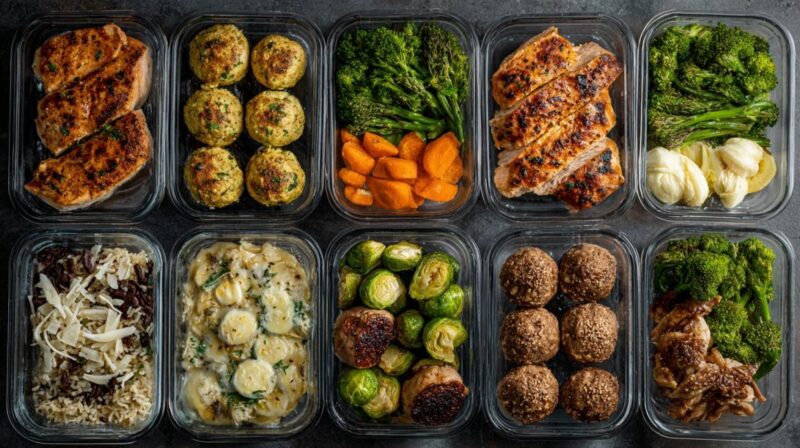
Meal prep does not need 15 containers and a Sunday lost to cooking. A lighter approach works better for many homes.
- Roasted potatoes or rice.
- Grilled chicken or lentils.
- Chopped vegetables.
- Boiled eggs.
- Yogurt, fruit, nuts, and oats.
Mixing components keeps meals from feeling repetitive. It also lowers the cost of staying consistent. Food waste drops because ingredients can become bowls, wraps, omelets, or quick dinners.
Conclusion
Home training becomes easier when healthy meals make the day more predictable. The real advantage is not a magic food, a perfect macro split, or a trendy supplement. The advantage is lower friction: fewer energy crashes, fewer skipped workouts, better recovery, and less late-night scrambling.
A strong home routine should pair simple workouts with simple meals: protein at main meals, enough carbohydrates for training, whole foods most of the time, and backup options for busy days. The best plan is the one that still works on an ordinary Wednesday.