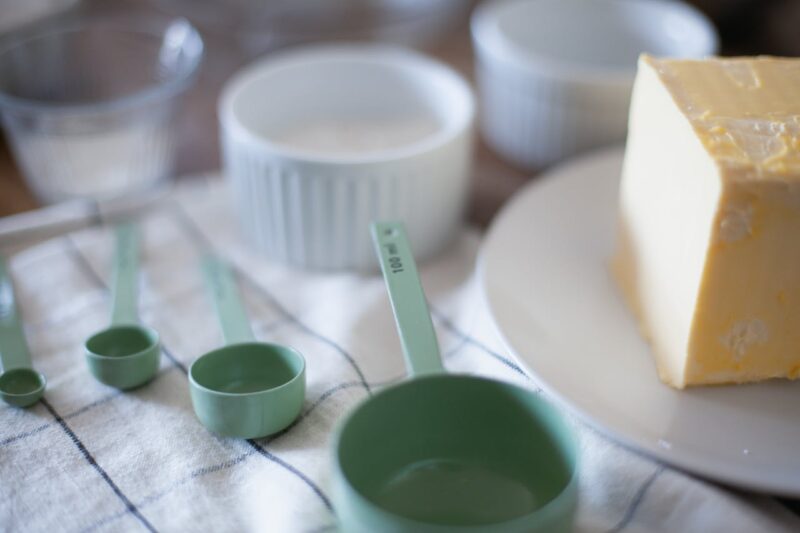
Cooking with international recipes often means translating U.S. cups, tablespoons, and ounces into grams and milliliters. While liquids convert cleanly, dry ingredients do not. A cup of flour does not weigh the same as a cup of sugar, oats, or rice.
U.S. recipes rely heavily on volume measurements. Most of the world relies on weight. Volume changes depending on how an ingredient is packed, sifted, or settled. Weight does not.
This is why:
- Baking recipes often fail when cups are converted incorrectly
- Flour is the most common source of error
- Sticky ingredients behave differently from dry ones
Whenever precision matters, grams are more reliable than cups.
Liquid Measurements: US. to Metric
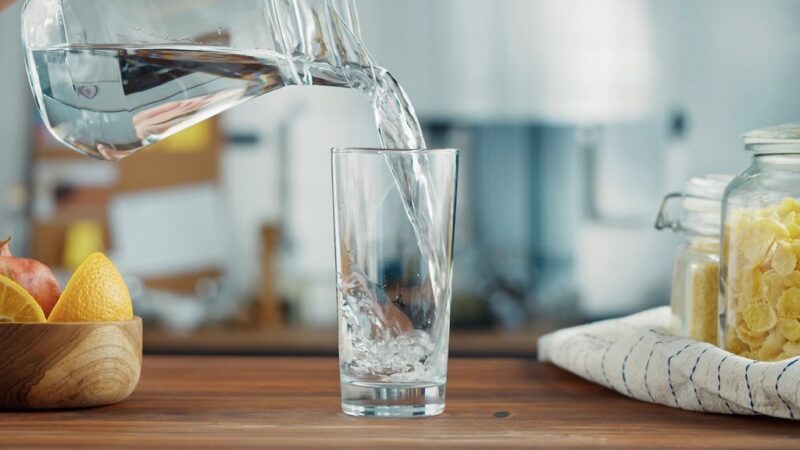
Liquids are the simplest to convert because volume behaves consistently.
U.S. Liquid Measurement Conversions
| U.S. Measure | Fluid Ounces | U.S. Unit | Metric Equivalent |
| 1 cup | 8 fl oz | 1/2 pint | 237 ml |
| 2 cups | 16 fl oz | 1 pint | 473 ml |
| 4 cups | 32 fl oz | 1 quart | 946 ml |
| 2 pints | 32 fl oz | 1 quart | 0.946 liters |
| 4 quarts | 128 fl oz | 1 gallon | 3.785 liters |
These conversions are reliable for water, milk, broth, and similar liquids.
Small Volume Measures Explained
Small measures are frequently used in baking and seasoning, where even small errors can affect results.
| Measure | U.S. Volume | Metric Equivalent |
| Dash | Less than 1/4 tsp | Approximate |
| 1 teaspoon | 1/6 fl oz | ~5 ml |
| 1 tablespoon | 1/2 fl oz | 15 ml |
| 2 tablespoons | 1 fl oz | 29.6 ml |
| 8 tablespoons | 4 fl oz | 118.5 ml |
A tablespoon is always three teaspoons, regardless of the ingredient.
All-Purpose Flour and Confectioners’ Sugar
These are among the lightest common baking ingredients.
| Cups | Grams | Ounces |
| 1/8 cup (2 Tbsp) | 16 g | 0.56 oz |
| 1/4 cup | 32 g | 1.13 oz |
| 1/3 cup | 43 g | 1.5 oz |
| 1/2 cup | 64 g | 2.25 oz |
| 2/3 cup | 85 g | 3 oz |
| 3/4 cup | 96 g | 3.38 oz |
| 1 cup | 128 g | 4.5 oz |
This assumes sifted or spooned flour, not packed.
Bread Flour
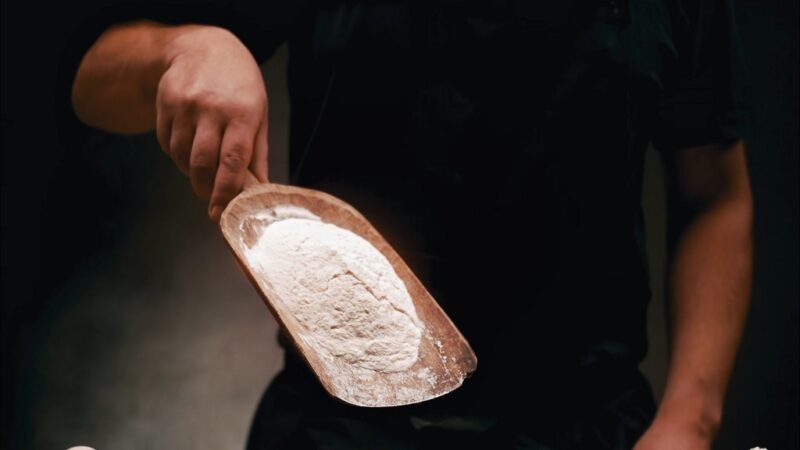
Bread flour is slightly heavier due to higher protein content.
| Cups | Grams | Ounces |
| 1/4 cup | 34 g | 1.2 oz |
| 1/3 cup | 45 g | 1.6 oz |
| 1/2 cup | 68 g | 2.4 oz |
| 1 cup | 136 g | 4.8 oz |
Bread flour contains more protein than all-purpose flour, which allows it to absorb slightly more water and develop stronger gluten. This higher protein content also makes it marginally heavier by volume.
When converting bread recipes from U.S. cups to grams, using these values helps maintain proper dough hydration.
Measuring bread flour by weight is especially important for yeast doughs, where even small differences in flour quantity can affect rise, texture, and crumb structure.
Rolled Oats
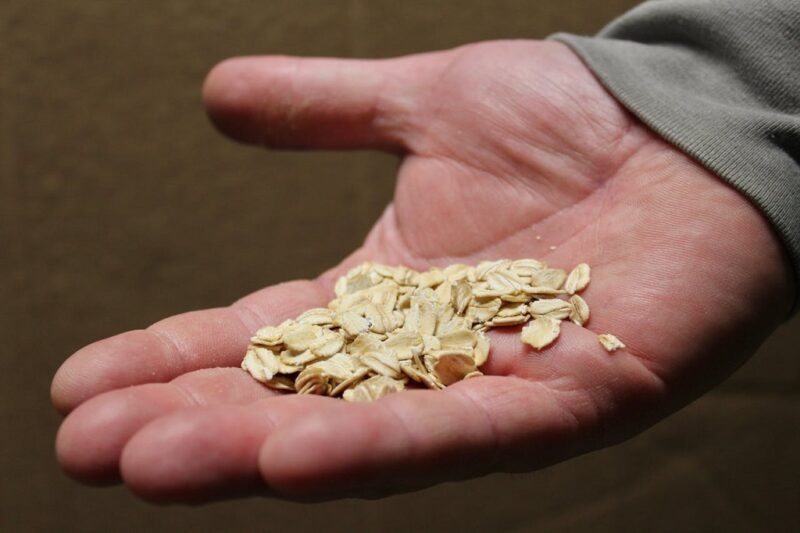
Oats are light but bulky.
| Cups | Grams | Ounces |
| 1/4 cup | 21 g | 0.75 oz |
| 1/3 cup | 28 g | 1 oz |
| 1/2 cup | 43 g | 1.5 oz |
| 1 cup | 85 g | 3 oz |
Rolled oats take up a lot of space because of their flat shape and air pockets between flakes, but they weigh relatively little. This is why a full cup of oats weighs far less than a cup of flour or sugar.
When baking, especially in cookies or oat breads, packing oats down can lead to inconsistent results.
For best accuracy, lightly fill the measuring cup or rely on grams when possible, particularly in recipes where oats contribute to structure rather than just texture.
White Sugar (Granulated)

Sugar packs densely and weighs significantly more than flour.
| Cups | Grams | Ounces |
| 2 Tbsp | 25 g | 0.89 oz |
| 1/4 cup | 50 g | 1.78 oz |
| 1/3 cup | 67 g | 2.37 oz |
| 1/2 cup | 100 g | 3.55 oz |
| 2/3 cup | 134 g | 4.73 oz |
| 3/4 cup | 150 g | 5.3 oz |
| 1 cup | 201 g | 7.1 oz |
Granulated sugar is made of compact crystals that settle closely together, which makes it much heavier per cup than flour or oats.
Because sugar directly affects sweetness, moisture retention, and browning, accurate measurement matters in both baking and cooking.
Using these conversions helps preserve the intended balance of sweetness and texture, especially when adapting European or older family recipes that specify weight instead of volume.
Brown Sugar (Packed)
Brown sugar must be packed, which increases the weight.
| Cups | Grams | Ounces |
| 1/4 cup | 55 g | 1.9 oz |
| 1/3 cup | 73 g | 2.58 oz |
| 1/2 cup | 110 g | 3.88 oz |
| 1 cup | 220 g | 7.75 oz |
Brown sugar contains molasses, which adds moisture and causes the sugar to clump. Recipes that call for brown sugar almost always assume it is firmly packed into the measuring cup. This packing significantly increases its weight compared to granulated sugar.
Using these weight equivalents ensures consistent sweetness and moisture, particularly in cookies, cakes, and sauces where brown sugar contributes to both flavor and texture.
Honey, Molasses, and Syrups

These are heavy liquids and weigh more than water.
| Cups | Grams | Ounces |
| 2 Tbsp | 43 g | 1.5 oz |
| 1/4 cup | 85 g | 3 oz |
| 1/3 cup | 113 g | 4 oz |
| 1/2 cup | 170 g | 6 oz |
| 2/3 cup | 227 g | 8 oz |
| 3/4 cup | 255 g | 9 oz |
| 1 cup | 340 g | 12 oz |
Honey, molasses, and syrups are denser than water due to their high sugar content. Although they are measured by volume in U.S. recipes, their weight is significantly higher than the same volume of milk or water.
This matters when converting recipes, especially for baked goods and sauces, where sugar concentration affects structure, sweetness, and moisture.
Weighing these ingredients in grams improves accuracy and makes international recipe adaptation much more reliable.
Butter: Weight-Based Explanation
Butter is sold by weight in most countries, which simplifies conversion.
One cup of butter weighs 227 grams.
| Butter Amount | Grams |
| 1/4 cup | 57 g |
| 1/3 cup | 76 g |
| 1/2 cup | 113 g |
| 1 cup | 227 g |
This is based on the standard conversion: 1 ounce = 28.34 grams
Common Ingredient Weight Reference
This table is useful when converting full recipes quickly.
| Ingredient | 1 Cup Weight |
| Granulated sugar | 200 g |
| Brown sugar (packed) | 220 g |
| Sifted white flour | 125 g |
| White rice (uncooked) | 185 g |
| White rice (cooked) | 175 g |
| Butter | 227 g |
| Slivered almonds | 108 g |
| Oil | 224 g |
| Maple syrup | 322 g |
| Non-fat milk | 245 g |
| Sweetened condensed milk | 306 g |
| Yogurt | 245 g |
| Water | 236 g |
| Milk powder | 68 g |
| Raisins (packed) | 165 g |
| Broccoli florets | 71 g |
| Confectioners sugar | 110 g |
| Cocoa powder | 125 g |
Bottom Line
For everyday cooking, volume measurements are usually sufficient. Liquids convert cleanly, and small variations rarely affect the final dish. Soups, sauces, and simple meals work well with cups and milliliters.
For baking, weight is the better choice. Flour, sugar, butter, and syrups change results significantly when measured by volume. Grams provide consistency and prevent common errors, especially with flour and packed or sticky ingredients.
When precision matters, use a kitchen scale. It removes guesswork and makes international recipes far more reliable.