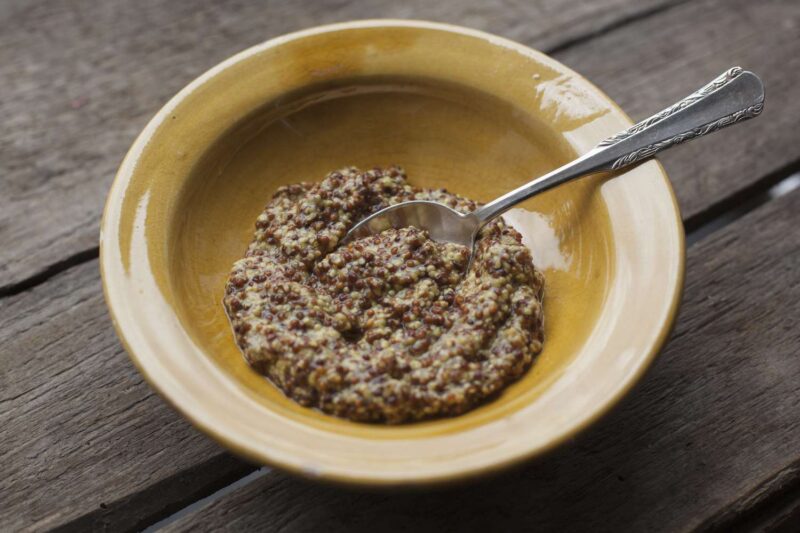
making it a familiar companion at many traditional tables. Sharp acidity and gentle heat work together to cut through savory foods and add contrast without overwhelming other ingredients.
Presence alongside classic comfort foods has made it a dependable condiment for both simple meals and hearty plates, especially when paired with items such as:
- Sausages, where mustard offsets fat and enhances seasoning
- Pretzels, offering a sharp counterpoint to soft dough and salt
- Roasted meats, adding brightness to deep, savory flavors
- Sandwiches, contributing moisture and bite without heaviness
Homemade preparation allows better control over flavor, striking a balance between sharpness and mild sweetness. Heat levels can shift easily by adjusting seed types, soaking time, or added sweeteners, allowing the mustard to suit personal preference or specific dishes.
Traditional use includes serving it with bratwurst or other sausages, yet versatility extends further. A spoonful can strengthen salad dressings, sharpen sauces, or act as a flavorful marinade base for pork, chicken, or vegetables.
With so many uses and easy adjustments, homemade German mustard earns a place as more than a simple side condiment.
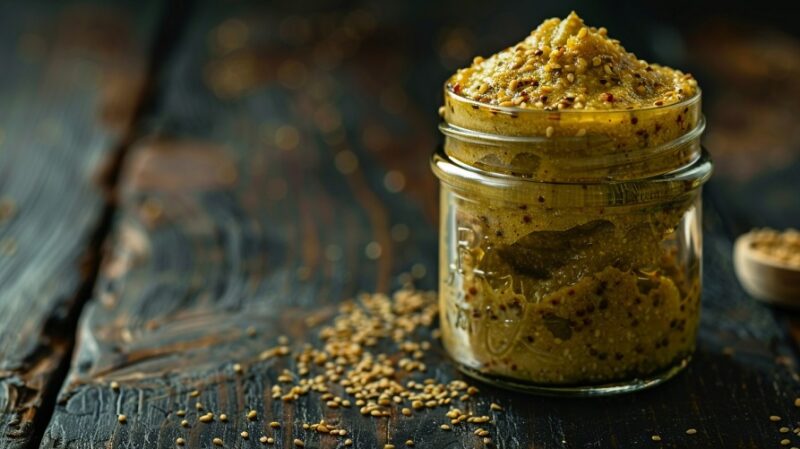
German Mustard Recipe
Ingredients
Equipment
Method
- Soak the SeedsIn a mixing bowl, combine yellow and brown mustard seeds with vinegar and water. Cover and let sit at room temperature for 12 to 24 hours to soften and develop flavor.
- Heat the MixturePour the entire soaked mixture into a small saucepan. Bring to a gentle simmer over low heat for about 5 minutes to bloom the spices.
- SeasonStir in salt, sugar (or honey), turmeric, and optional allspice. Mix well and remove from heat.
- Blend to Desired TextureTransfer the mixture to a blender, spice grinder, or mortar and pestle. Blend or grind to your preferred texture - from grainy to smooth.
- Rest and Mature Spoon the mustard into a clean glass jar. Seal and refrigerate for at least 24 hours to mellow and marry the flavors.
- Serve or Store Use immediately after resting, or keep refrigerated for up to 2 months for deeper flavor.
Video
Notes
- Adjust Heat: More brown seeds = spicier mustard. For milder flavor, use only yellow seeds.
- Sweet Variant: Substitute honey for sugar to create a Bavarian-style mustard.
- Flavor Boost: Add a splash of beer or a pinch of garlic powder for regional flair.
- Thinning: If your mustard thickens too much over time, stir in a bit of water or vinegar.
Are There Any Alternative Ingredients?
German mustard recipes allow flexibility when certain ingredients are unavailable or when flavor adjustments feel necessary. Small substitutions can change heat, sweetness, or texture while keeping the condiment functional for sausages, cabbage dishes, and dressings.
Adjustments work best when changes stay close to traditional flavor profiles, keeping sharpness and acidity intact.
Several ingredient swaps work well without compromising results:
- Mustard seeds – Yellow seeds can replace brown seeds for a milder result, while brown or black seeds increase heat and intensity.
- Vinegar – Apple cider vinegar adds subtle fruit notes, while white wine vinegar keeps flavors clean and sharp.
- Sweetener – Honey offers gentle sweetness, maple syrup adds depth, and white sugar keeps the profile neutral.
- Liquid base – Beer or light broth may replace water for added body and savory character.
- Spices – Caraway, coriander, or a pinch of paprika can adjust the aroma without overpowering the mustard.
Alternative ingredients allow cooks to tailor German mustard to personal taste, dietary needs, or pantry limitations while maintaining balance and usability across traditional dishes.
Dishes That Benefit The Most From Adding German Mustard
German mustard brings sharpness and gentle heat that lift savory foods without overpowering them. Sausage plates gain contrast as the mustard cuts through fat and adds balance, while warm grain or potato sides feel brighter with a spoonful stirred in.
Meals centered on hearty proteins often feel more complete when paired with a mustard that offers acidity and spice in equal measure.
Sausage dishes show some of the strongest results, especially classic Central European styles. Different varieties respond in distinct ways, making mustard an easy match across many preparations.
- Bratwurst – Mild pork flavor gains definition with a smooth or medium hot mustard served on the side.
- Weisswurst – Sweet Bavarian mustard pairs well with delicate seasoning and soft texture.
- Knockwurst – Garlic notes taste sharper with a stronger mustard spread on bread.
- Bockwurst – Herb-forward sausage benefits with a coarse mustard brushed on after grilling.
- Frankfurter-style sausages – Fine texture works best with smooth mustard used sparingly.
Cabbage-based dishes also respond very well to German mustard, especially cooked preparations. Heat softens cabbage’s sweetness, and mustard adds contrast that keeps flavors lively.
- Sauerkraut – A small spoon mixed in just before serving sharpens fermented notes.
- Braised red cabbage – Mild sweetness feels more balanced with mustard stirred into the cooking liquid.
- Warm cabbage salad – Vinegar and mustard together create a bold dressing that coats leaves evenly.
- Cabbage and sausage skillet – Mustard ties meat and vegetables together in a cohesive way.
Used thoughtfully, German mustard supports hearty cooking and adds clarity to dishes built on sausage and cabbage without stealing focus.
In Conclusion
German mustard proves its value as a finishing touch that brings balance to hearty meals.
Sausage dishes gain sharper definition, while cabbage preparations feel more lively and structured with just a small addition. Careful use enhances savory depth and keeps flavors clear rather than heavy.
Cooks looking to strengthen traditional plates can rely on German mustard as a dependable companion that complements familiar ingredients and supports satisfying, well-rounded dishes.