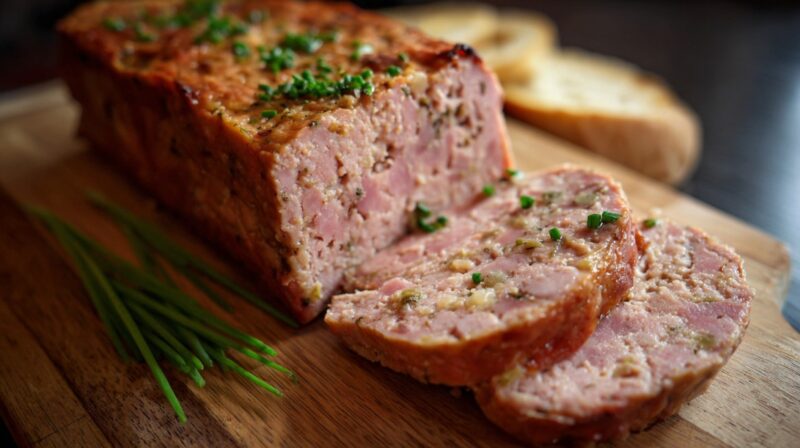
Leberkäse, often found in butcher shops and beer halls across Bavaria, is a finely ground meatloaf traditionally made with pork, veal, and a touch of bacon or fat for richness.
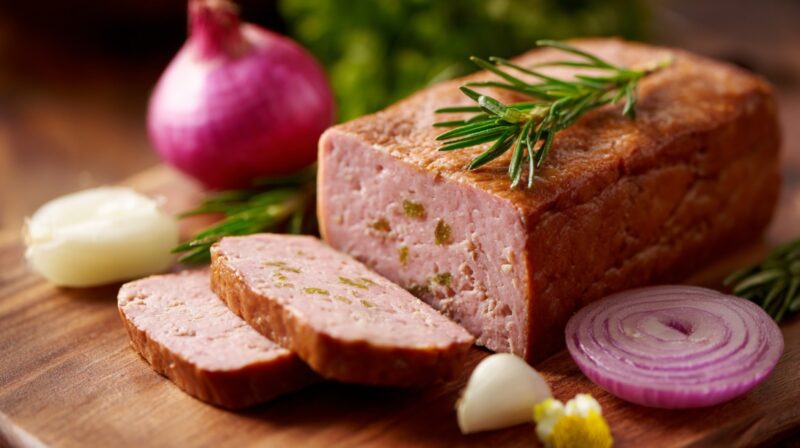
Its name translates to “liver cheese,” though most modern versions contain no liver and definitely no cheese, just a smooth, dense meat mixture baked until a dark golden crust forms on top.
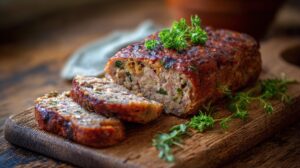
That contrast between the crisp, slightly chewy crust and the soft, bologna-like interior is what makes each bite satisfying.
Served hot, thick slices of Leberkäse pair perfectly with sharp or sweet mustard and freshly baked pretzels, making it a classic midday meal or a popular beer garden snack. Many enjoy it tucked into a crusty roll with onions and pickles as a quick street food-style sandwich.
Cold leftovers are just as enjoyable, sliced thin and layered into hearty sandwiches with rye bread and tangy condiments.
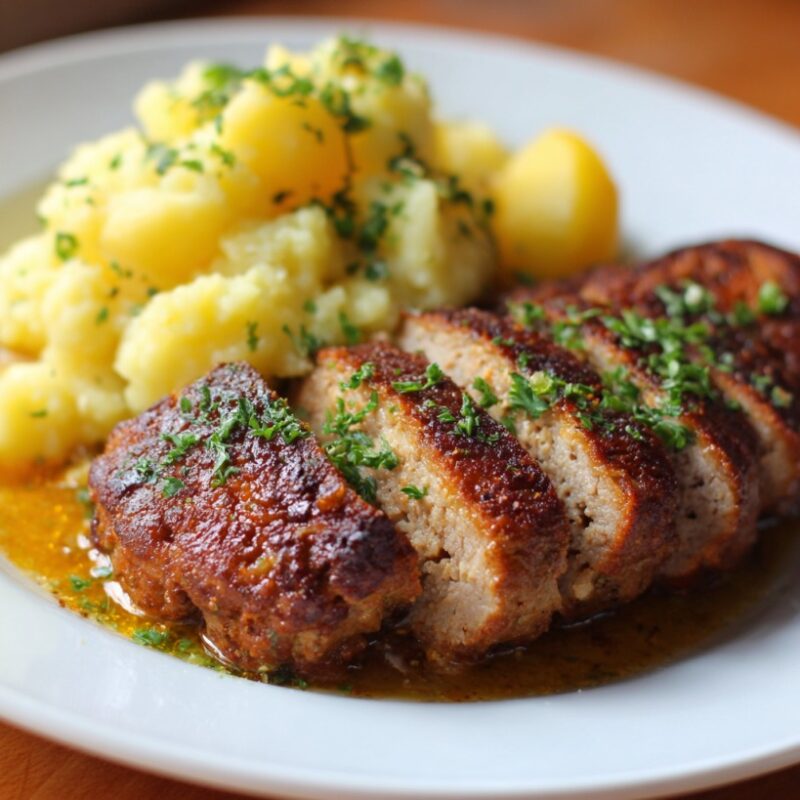
Authentic Bavarian Leberkäse Recipe
Ingredients
Equipment
Method
- Pre-chill ingredients: Place all meat and fat in the freezer for about 30 minutes to ensure they are very cold but not frozen solid.Grind the meat: Using a meat grinder or food processor, grind the pork shoulder, veal, and pork fat together until very fine. Repeat once more for a smoother texture.
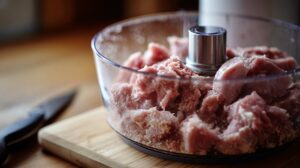
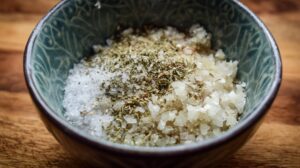
- Add spices: Mix in the grated onion, white pepper, marjoram, coriander, ginger, nutmeg, salt, and curing salt (if using).Emulsify with ice: Gradually add crushed ice or ice water while blending the mixture in a food processor. Continue until it becomes a smooth, thick paste.
- Shape the loaf: Preheat the oven to 325°F (160°C). Lightly grease a loaf pan. Press the meat mixture into the pan, smoothing the top and rounding it slightly.Bake: Place the loaf in the oven and bake for about 90 minutes, or until the internal temperature reaches 160°F (70°C). The top should form a golden brown crust.
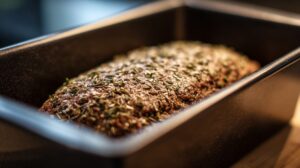
- Cool slightly: Let rest for 10 minutes before slicing. Serve warm or allow to cool completely for cold servings.
Video
Notes
| Nutrient | Amount per Serving |
|---|---|
| Calories | 420 kcal |
| Carbohydrates | 1g |
| Protein | 22g |
| Fat | 38g |
| Serving Size | 150g |
| Saturated Fat | 14g |
| Polyunsaturated Fat | 3g |
| Monounsaturated Fat | 16g |
| Trans Fat | 0.3g |
| Cholesterol | 95mg |
| Sodium | 780mg |
| Potassium | 370mg |
| Fiber | 0g |
| Sugar | 0g |
| Vitamin A (IU) | 40 IU |
| Vitamin C | 2mg |
| Calcium | 15mg |
| Iron | 1.2mg |
Cooking Tips
- Using very cold ingredients ensures the emulsion doesn't break, preserving a smooth texture.
- A water bath in the oven can prevent cracking on the surface.
- For a deeper flavor, refrigerate the meat mixture overnight before baking.
- Serve with German mustard, pickles, and a pretzel or potato salad for a traditional experience.
What are Perfect Food Pairings for Leberkäse
Leberkäse shines when paired with simple, flavorful sides that highlight its hearty, savory profile. Traditional Bavarian accompaniments bring balance and regional authenticity to the plate.
- Freshly baked pretzels provide a salty, chewy contrast to the soft interior of the meat.
- German mustard delivers a tangy, mildly spiced note that complements the savory depth of Leberkäse.
German potato salad (Kartoffelsalat), particularly the southern-style warm version, is another standout companion.
Made with a vinegar-based dressing, it offers a light, acidic counterpoint. Enhancements like thinly sliced onions and crispy bacon pieces introduce both sharpness and richness that mirror and elevate the meat’s own flavors.
To turn Leberkäse into a complete, satisfying main course, consider hearty fermented vegetables.
- Sauerkraut, fermented and slightly briny, cuts through the fattiness of the loaf.
- Red cabbage, typically braised with apple and vinegar, adds color, sweetness, and a bit of tartness to the dish.
Cold Leberkäse is just as versatile. When served as part of a snack board or in a sandwich, build around strong, structured elements that can carry the dense meat.
- Dense rye bread, preferably seeded, to add firmness and a nutty aroma.
- Pickled gherkins, for crunch and acidity.
Sharp mustard or horseradish, used sparingly, to provide heat and contrast.
Fried eggs placed directly over a thick, hot slice of Leberkäse turn it into a comforting breakfast dish. Pairings don’t stop at food, certain drinks enhance the overall experience.
- Helles (light lager), offering mild bitterness and carbonation.
- Weissbier (wheat beer), with its fruity, yeasty notes that pair naturally with both the meat and its usual sides.
The Bottom Line
Making Leberkäse at home offers a chance to enjoy Bavarian comfort food at its finest. Careful preparation, quality ingredients, and attention to detail create a loaf that’s flavorful, satisfying, and versatile.
Served hot with mustard and pretzels or cold in a crusty sandwich, it brings bold taste to any table. Ideal for breakfast, lunch, or dinner, Leberkäse fits easily into both everyday meals and special gatherings.
Try it with classic sides, pour a cold beer, and enjoy a timeless dish rooted in tradition.